

A Land Watched Over by Narayana, Gangamma, Bhairava, and Hanuman
Budigere – A Spiritual Gateway on the Ancient Road to Divine Grace
Budigere stands as a blessed threshold where the ancient and the eternal converge. Located in East Bengaluru, just 8.8 kilometers from Kempegowda International Airport and strategically positioned on the historic Old Madras Road, this sacred land has witnessed centuries of unbroken devotion. For generations spanning millennia, devotees have experienced protection, courage, healing, and peace through the temples that grace this hallowed region.
The spiritual strength of Budigere flows from traditions older than recorded history—from village faith rooted in Dravidian antiquity, from Puranic heritage connecting to the Mahabharata era, and from living devotion that pulses through these sacred grounds every single day. Each temple here carries its own divine mandate in guiding, protecting, and uplifting the people.
Sri Deshanarayana Swamy Temple
The Ancient Pillar of Dharma – A 5,000-Year Legacy
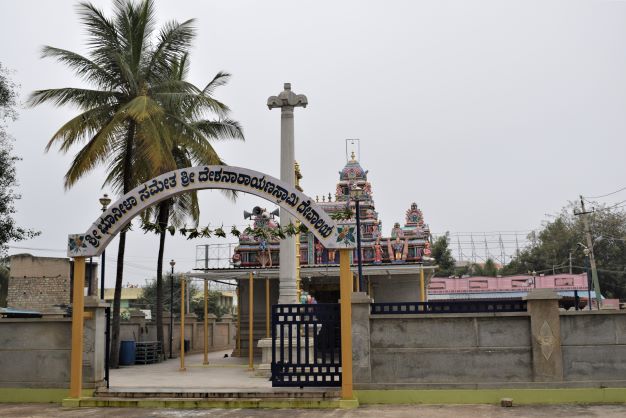
Sri Deshanarayana Swamy Temple stands as perhaps Budigere’s most ancient spiritual treasure, its roots reaching back into the mists of the Satya Yuga. Local tradition, preserved through generations of devoted custodianship, traces this temple’s origins to approximately 5,000 years ago—to the very era of the Mahabharata.
The Legend of Divine Establishment
According to sacred tradition, this temple was established by none other than Bhima, the mighty Pandava, in collaboration with Lord Indra, the king of the Devas. The presiding deity here is one among only five sacred Narayana Swamy idols installed by Lord Indra himself during the Satya Yuga, making this temple not merely ancient but primordial—a living link to the age when gods walked among mortals.
The Sacred Pushkarini and Temple Complex
The temple’s architectural and spiritual magnificence is enhanced by its beautiful and expansive pushkarini (sacred temple tank), which serves as more than a water body—it is a repository of spiritual energy accumulated over millennia. The pushkarini features a statue of Swami Vivekananda at its center, symbolizing the meeting of ancient devotion with modern spiritual awakening. Devotees traditionally circumambulate this sacred tank, walking along the dedicated pathway that allows for both physical exercise and spiritual contemplation.
The presence of Lord Narayana here brings a deep sense of cosmic order (rita), balance, and continuity to the land. As a form of Lord Vishnu in his role as the Preserver, Deshanarayana Swamy maintains dharma and ensures the protection of devotees across ages. The very name “Deshanarayana” speaks to his role as the protector-deity of this land (desha).
Special Observances and Temple Traditions
The temple conducts Kalyana Utsavam (ceremonial marriage of the deity) on the last Saturday of every month, a beautiful tradition that draws devoted families who participate in this sacred celebration. Daily aarti is performed with profound devotion, and the prasadam offered here carries the blessings accumulated through thousands of years of unbroken worship. The temple opens early for morning worship and maintains a serene atmosphere that invites deep spiritual experience.
Kala Bhairava Shrine
The Eternal Guardian Who Watches Over the Sacred Boundaries
Kshetrapalaka: The Protector of Sacred Space
Located within the temple complex of Sri Deshanarayana Swamy, at one of the corners of the sacred pushkarini, stands the shrine of Kala Bhairava—the fierce and protective manifestation of Lord Shiva. Bhairava is worshipped here in his paramount role as Kshetrapalaka, the guardian deity of the entire temple complex and sacred grounds.
The Philosophy of Kala Bhairava
The very name reveals profound meaning: “Kala” signifies time itself, and “Bhairava” means “the fierce” or “terrifying.” Kala Bhairava is thus the Master of Time, the Lord who presides over the cycles of creation and destruction, ensuring cosmic discipline and spiritual order. In Hindu temple tradition, Bhairava serves as the Kotwal or guardian, protecting sacred spaces from negative energies and maintaining the sanctity of holy ground.
The Sacred Tradition of Temple Keys
In ancient temple customs still practiced in many sacred sites, the temple keys are ceremoniously placed at Kala Bhairava’s feet after closing the doors each evening and taken back with his permission for opening the main temple doors each morning. This ritual acknowledges his authority as the eternal watchman who never sleeps, never rests, and never abandons his post.
Bhairava and the Dog: Symbols of Loyalty and Vigilance
Kala Bhairava’s vahana (vehicle) is the dog, a choice rich with symbolic meaning. The dog represents unwavering loyalty, alertness, and the ability to perceive what ordinary senses cannot detect. In Budigere, this symbolism resonates deeply within daily life, reinforcing the understanding that this land is watched over with constant, intelligent care. Devotees often feed dogs as a form of worship to Kala Bhairava, recognizing the sacred connection.
Worship and Benefits
Devotees worship Kala Bhairava to:
- Overcome the malefic effects of Saturn (Shani) and Rahu
- Develop mastery over time and discipline in life
- Receive protection during travels and transitions
- Destroy ego and negative attachments
- Gain courage to face life’s challenges
Traditional offerings include black sesame seeds, coconut, honey, and lighting of diyas. Tuesdays and Saturdays, as well as Ashtami tithis (eighth lunar day), are considered especially auspicious for Bhairava worship.
The Philosophy of Time Worship
Kala Bhairava teaches humanity a profound truth: life’s quality depends entirely on how one relates to time. Those who waste time through idleness receive difficulties; those who worship time—recognizing each moment as sacred—receive prosperity, victory, and peace. Even a millisecond, when used with devotion and purpose, can transform one’s destiny. Kala Bhairava is both the keeper and the teacher of this essential wisdom.
Sri Gangamma Devi Temple at Nallur Kote
The Sacred Mother Amidst Ancient Tamarind Groves
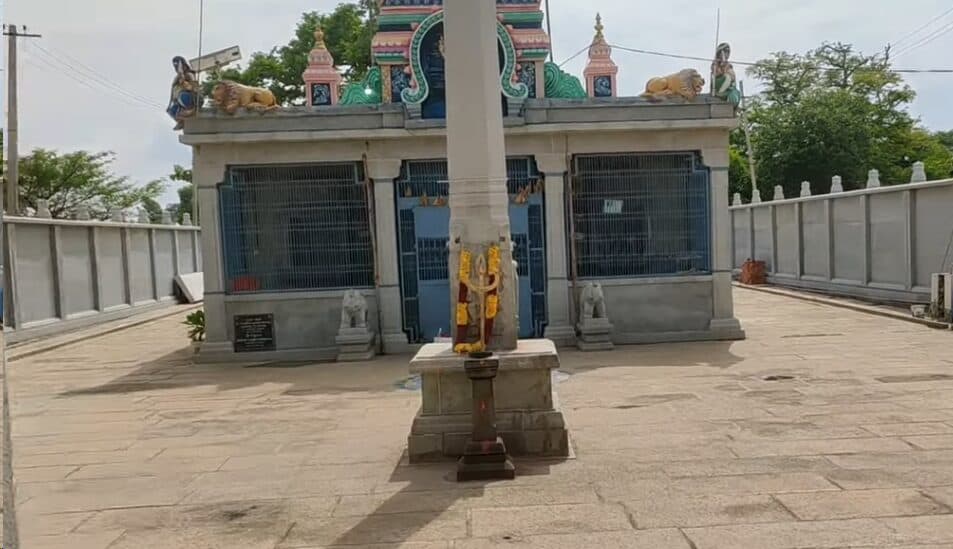
A Temple Within Nature’s Cathedral
In the nearby village of Nallur (approximately 15 km from Budigere, both in Devanahalli taluk near the airport), nestled within India’s first biodiversity heritage site—the sacred 400-year-old tamarind grove—stands the ancient temple of Sri Gangamma Devi. This temple represents the beautiful convergence of natural preservation, historical legacy, and living village deity worship.
The Sacred Grove and Chola Legacy
The Nallur Tamarind Grove, dating back to the 12th-13th century Chola period, houses more than 300 tamarind trees, some exceeding 400 years in age. Local tradition holds that these trees were planted during Rajendra Chola’s reign. The grove has been protected for centuries as a sacred space, with villagers believing that anyone who harms the trees will face divine retribution.
Within this natural temple stands the Gangamma Devi shrine, believed to have been built during Chola rule and recently renovated to restore its former glory. A magnificent peepal tree guards the entrance, alongside ancient Naga stones and weathered sculptures that speak of centuries of devotion.
Gangamma: The Mother Goddess Who Protects the Land
Sri Gangamma Devi is worshipped here as the powerful Grama Devata—the village deity whose protection extends into every aspect of life. Unlike the philosophical deities of Sanskritic Hinduism, Gangamma is immediately present, directly concerned with the daily welfare of her children.
She embodies the divine manifestation of the sacred river Ganga, representing purity, life-giving sustenance, and the power to cleanse all afflictions. In Karnataka tradition, she is revered as one of the protective local deities who work to safeguard communities from epidemics, ensure agricultural prosperity, and grant fertility blessings.
The Gramadevata Tradition: Ancient Roots
The worship of village goddesses like Gangamma traces back to ancient Dravidian traditions, possibly originating in the agricultural cults of the 3rd-4th millennium BCE. These mother goddesses were represented in terracotta figurines and worshipped as embodiments of earth’s fertility (Bhumi) and the life force that sustains creation.
Village deity worship is characterized by:
- Direct accessibility: Simple shrines often in natural settings
- Community priesthood: Local families who have served these shrines for generations
- Pragmatic focus: Protection from disease, drought, and disaster
- Communal worship: Entire villages participate in rituals and festivals
- Female predominance: Most village deities are goddesses reflecting agricultural associations
What Devotees Seek
Prayers offered to Gangamma Devi encompass:
- Protection of families and children
- Health restoration and epidemic prevention
- Abundant rainfall for crops
- Prosperity and economic stability
- Strength during challenging times
- Blessings for progeny and marital harmony
The Sacred Connection: Nallur Fort and Hidden Temples
The area surrounding the Gangamma temple was once the fortified city of Nallur Kote Patna, built in the 14th century by local chieftains. While the fort itself has vanished to time—destroyed during battles and palace explosions that buried untold treasures—the sacred grove has survived as a protected spiritual sanctuary.
Hidden within the grove are the ruins of the Channarayaswamy (Tirumalanatha) temple, featuring exquisite Vijayanagara-style carvings depicting infant Krishna’s divine leelas, including his dance on the serpent Kalinga. These sculptures, though weathered, retain extraordinary fluidity and grace—a testament to the artistic and spiritual brilliance of centuries past.
Visiting the Sacred Grove
The Nallur Tamarind Grove and Gangamma temple can be reached from Devanahalli via the Hoskote route. The major landmark is the Gangamma temple itself, with the ancient grove spreading around it like nature’s own mandala of protection.
Hanuman Worship in Budigere
Strength, Courage, and Protection in Every Direction
The Circle of Protection: Multiple Anjaneya Shrines
Budigere is richly blessed with multiple Hanuman temples and Anjaneya shrines scattered throughout the region, each serving as a powerful center of courage, devotion, and divine protection. These temples form a spiritual protective circle around the land, with Hanuman’s watchful presence surrounding the community from all directions.
The Unique Power of Hanuman
Among all Hindu deities, Hanuman holds a special position of accessibility and manifest energy. According to spiritual traditions, Hanuman possesses approximately 72% manifest energy—significantly higher than most other deities who typically maintain around 10% manifest energy. This extraordinary manifested presence means that Hanuman’s grace can be experienced more immediately and tangibly by devotees.
Why Devotees Turn to Hanuman
Devotees worship Hanuman in Budigere and throughout India for multiple essential blessings:
- Protection from Negative Energies: Hanuman destroys evil spirits, negative planetary influences, and malevolent forces
- Shani Dosh Remedies: Protection from the afflictions of Saturn (Shani), especially during Sade Sati periods
- Courage and Fearlessness: Strength to face life’s battles with unwavering determination
- Spiritual Awakening: Guidance for seekers on the path of inner transformation
- Mental Discipline: Control over mind and senses
- Devotion to Rama: The ultimate example of surrender and bhakti
Sacred Days: Tuesday and Saturday Worship
Tuesday (Mangalvar):
Hanuman was born on a Tuesday during Chaitra Purnima (full moon), making this day sacred to him from birth. Tuesday is associated with Mars (Mangal), representing strength, courage, and warrior energy—qualities Hanuman embodies perfectly. Devotees traditionally:
- Visit temples before sunrise
- Offer red flowers, vermilion (sindoor), and red cloth
- Present besan laddoos and jaggery
- Recite Hanuman Chalisa
- Offer red flags with “Sri Ram” inscribed
Saturday (Shanivar):
Saturday holds special significance due to the legendary connection between Hanuman and Shani Dev (Saturn). According to tradition, when Hanuman was searching for Sita in Lanka, he heard Shani Devata crying for help from Ravana’s prison. Hanuman freed Shani, who in gratitude pledged never to afflict Hanuman’s devotees. Thus, Saturday worship of Hanuman provides powerful protection against Saturn’s malefic effects.
Traditional Offerings:
- Sindoor (vermilion): Orange sindoor is especially powerful (Note: women typically offer red flowers instead)
- Betel leaves: Garlanded with areca nut pieces, recalling Sita Devi’s offering
- Tulsi (basil): Sacred to both Vishnu and Hanuman
- Jasmine flowers: On Thursdays specifically
- Oil: Black sesame oil on Saturdays
- Bananas, coconuts, and jaggery
- Red flag: Triangular with “Ram” inscription
The Chiranjeevi: The Eternal Living Presence
Hanuman is revered as one of the Chiranjeevis—the seven immortals who continue to live through the ages, protecting dharma and devotees. This belief creates a unique relationship: Hanuman is not merely remembered or invoked—he is present, alive, accessible. Devotees don’t merely pray to a historical figure but commune with a living, eternal guardian.
Sri Kumbara Bavi Anjaneya Swamy Devasthana
Hanuman Who Blesses the Road and the Traveler

The Elevated Guardian of the Highway
Sri Kumbara Bavi Anjaneya Swamy Devasthana carries a distinctive and spiritually significant presence along the busy Whitefield-Airport Road. The temple’s most remarkable feature is the magnificent form of Lord Hanuman placed high above the temple structure, clearly visible from the main road, blessing everyone who passes—travelers, daily commuters, airport taxi drivers, business professionals, and devoted pilgrims alike.
Darshan from the Road: Blessing in Motion
This elevated positioning serves a profound spiritual purpose. Many people—perhaps rushing to catch flights, commuting to work, or traveling long distances—experience a moment of quiet reassurance when their eyes meet Hanuman from the road. That brief darshan, even from a moving vehicle, is believed to provide:
- Safe journey and protection from accidents
- Mental peace during travel
- Removal of obstacles in the day ahead
- Divine companionship on the road
This architectural choice reflects Hanuman’s eternal role as the guardian of paths, directions, and intentions—the deity who protects not just physical journeys but life’s larger spiritual journey.
The Temple Atmosphere: Peace That Transforms
Within the temple grounds, devotees discover an atmosphere of remarkable depth and tranquility. Despite being located on one of Bangalore’s busiest corridors, the moment one steps into the temple courtyard, road noise fades and a feeling of protection arises naturally. This transformation is not architectural but spiritual—the result of years of devoted worship and Hanuman’s living presence.
Devotees consistently testify that even a short darshan here changes the rhythm of their day, leaving them:
- Calmer and more centered
- Assured and protected
- Strengthened for challenges ahead
- Connected to devotional consciousness
Modesty and Power United
The temple follows a simple architectural approach—modest in form, painted in traditional colors, shaded by sacred trees. It doesn’t rely on grandeur or elaborate decoration. Yet its spiritual power is unmistakable. This reflects an essential teaching: true divinity requires no external display; the power resides in the presence itself.
24-Hour Darshan: The Guardian Who Never Sleeps
The sanctum is designed so that Hanuman’s form remains visible at all times, day and night. This continuous accessibility symbolizes Hanuman’s nature as the eternal protector who never rests, never abandons his devotees, and remains perpetually alert to their needs.
Weekly Worship and Special Days
While the temple welcomes devotees daily, special observances occur:
- Tuesdays and Saturdays: Peak worship days with larger gatherings
- Hanuman Jayanti: Grand celebration of Hanuman’s birth
- Auspicious tithis: Special poojas and offerings
- Regular aarti: Daily worship maintaining the temple’s spiritual energy
The Influence on Surroundings
Local residents and business owners often remark that the area around the temple carries a tone of respect and orderliness. Shops and establishments along this stretch of Budigere reflect a quiet discipline, as though influenced by the aura of the shrine. This demonstrates how Hanuman’s presence extends beyond the temple walls, shaping the environment with calm strength.
Sai Baba Temple, Budigere
Compassion, Peace, and Steady Faith
The Beloved Saint’s Presence in Budigere Village
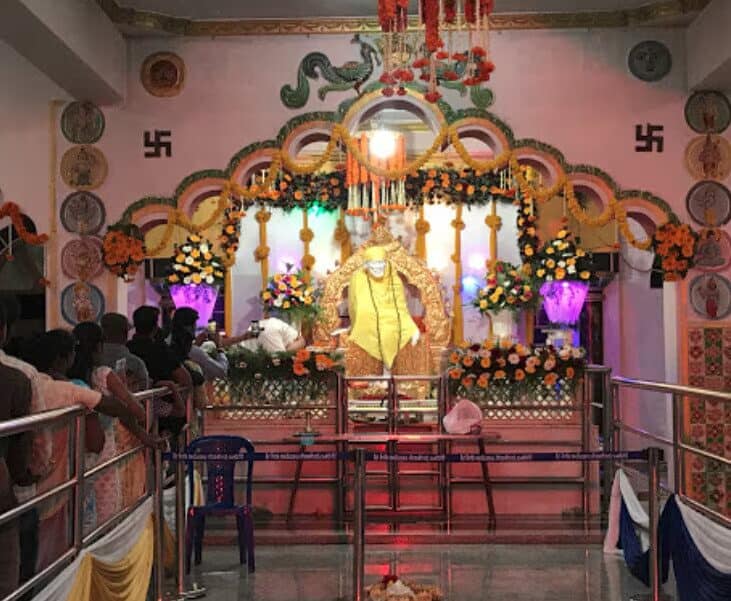
Located within Budigere village itself (near the water tank), the Sri Shirdi Saibaba Seva Kendra offers a serene space dedicated to the beloved saint of Shirdi, whose message of faith and patience resonates across all communities. The temple’s idol is said to closely resemble the original Sai Baba idol at Shirdi, creating a powerful connection for devotees.
The Universal Saint
Sai Baba transcended religious boundaries, teaching that all paths lead to the one divine reality. His presence in Budigere adds a dimension of:
- Interfaith harmony: Welcoming devotees from all backgrounds
- Patience and trust: Faith in divine timing
- Simplicity: Surrender to God’s will
- Service: Selfless giving to others
Temple Significance
Built in the 1990s and subsequently renovated, this temple has become spiritually significant in the region. So powerful is its sacred energy that when the Marathahalli Sai Baba Temple was established in 2008, the sacred Dhuni (eternal fire) was kindled using embers brought specifically from this Budigere Sai Baba Temple—acknowledging its spiritual potency.
The temple management arranges for prasadam directly from Shirdi Sai Baba Temple, maintaining the sacred connection to the original shrine. A small store offers devotional books, music, and pooja items for devotees.
Worship and Observances
The temple conducts:
- Daily aarti with collective devotional singing
- Sai Satyanarayana Vratha: Performed monthly on Poornima (full moon day) between 11 AM to 1 PM (contribution: ₹51)
- Thursday special worship (Sai Baba’s sacred day)
- Festival celebrations with community participation
Temple Timings: 6:30 AM to 9:00 PM daily
A Unique Tradition
Many devotees purchase biscuits from nearby shops to feed the dogs near the temple—a practice inspired by Sai Baba’s own love for feeding animals. This beautiful tradition keeps alive the saint’s message of compassion for all living beings.
What Devotees Experience
Visitors come seeking:
- Calmness and emotional balance
- Clarity in decision-making
- Relief from mental anxiety
- Blessings for family harmony
- Faith during uncertain times
Sai Baba’s gentle presence brings harmony to Budigere’s spiritual landscape, reminding devotees of patience, unconditional love, and trust in the divine plan.
Village Deities of Budigere
Guardians of Everyday Life – The Grama Devate Tradition
The Ancient Protection System
Budigere, like thousands of Karnataka villages, is lovingly protected by grama devate—village deities such as Mariyamma, Muneshwara, Chowdeshwari, and others. These deities represent one of India’s oldest continuous religious traditions, with roots stretching back thousands of years.
Who Are the Grama Devate?
Village deities serve as the first line of spiritual defense for rural communities. They are:
- Localized protectors: Each deity guards specific villages or regions
- Immediate helpers: Concerned with daily welfare and community wellbeing
- Predominantly female: Reflecting agricultural associations and earth’s fertility
- Pragmatic in function: Preventing disease, ensuring crops, protecting children
The Sacred Functions
Village deities are invoked for:
- Disease prevention: Especially epidemics and seasonal illnesses
- Agricultural success: Rainfall, pest control, bountiful harvests
- Family protection: Safe childbirth, child health, domestic harmony
- Community wellbeing: Resolution of conflicts and maintenance of social order
- Natural disasters: Protection from droughts, floods, and calamities
Common Karnataka Grama Devate
Mariyamma/Marikamba: Perhaps the most widespread village goddess across Karnataka and Tamil Nadu. Associated with rain, agriculture, and disease prevention (especially fevers). Her temples range from simple structures to beautifully maintained shrines. Offerings include ragi, turmeric, coconut, and traditional food items.
Muneshwara: Male village deity often worshipped alongside goddesses. Acts as the protector from external threats and maintains village boundaries. Devotees seek his blessings for courage and protection.
Chowdeshwari: Powerful protective goddess, often associated with boundaries and crossroads. Guards against negativity entering the village from outside.
Worship Characteristics
Village deity worship reflects the ancient folk traditions of Karnataka:
- Community priesthood: Local hereditary priests who have served these shrines for generations
- Simple offerings: Flowers, fruits, coconuts, turmeric, ragi, and traditional food items
- Communal participation: Entire village involved in festivals and celebrations
- Accessible shrines: Often beautifully simple structures, sometimes under sacred trees or in natural settings
- Oral traditions: Sacred stories and legends passed down through generations
Daily Presence
Unlike temple deities who might be approached for major life events, grama devate are woven into daily routines:
- Morning prayers before work begins
- Offerings during planting and harvest
- Consultation during illness
- Celebration during village festivals
- Protection sought before travel
The Balance with Temple Deities
In Budigere, as throughout Karnataka, villagers maintain relationships with both types of deities:
- Temple gods (Narayana, Shiva, Hanuman): For dharma, moksha, and cosmic order
- Village deities: For immediate protection, health, and prosperity
This dual system reflects profound spiritual wisdom: both the universal and the local, the eternal and the immediate, are necessary for complete spiritual life.
A Sacred Darshan Path Through Budigere and Surrounding Temples
For devotees wishing to experience the full spectrum of this region’s spiritual blessings, here is a suggested pilgrimage route:
🌅 Dawn – Sri Deshanarayana Swamy Temple, Budigere
Begin with the ancient Lord who has protected this land for 5,000 years. Witness morning aarti, circumambulate the sacred pushkarini, absorb the serenity that has sustained countless generations.
🛡️ Early Morning – Kala Bhairava Shrine, Budigere
Pay respects to the guardian deity who watches over sacred boundaries. Seek his blessings for discipline, courage, and mastery over time.
🌳 Mid-Morning – Sri Gangamma Devi Temple, Nallur Kote
Journey to the sacred tamarind grove (15 km from Budigere) where the ancient mother goddess resides amidst 400-year-old trees. Experience the convergence of nature and devotion, explore the hidden temple ruins, and offer prayers for family protection and prosperity.
🌇 Afternoon/Evening – Sri Kumbara Bavi Anjaneya Swamy Devasthana, Budigere
Experience the elevated darshan of Hanuman blessing the road, the atmosphere of strength and devotion, and the protection that surrounds travelers and seekers. If your heart moves you, perform a simple seva for the bhakts who visit—cleaning the bench outside or sweeping the compound—for serving Hanuman’s devotees brings His blessings beyond measure.
🕉️ Late Afternoon – Village Deity Shrines, Budigere
Pay respects to local grama devate (Mariyamma, Muneshwara, Chowdeshwari) who guard daily life. Offer simple, heartfelt prayers acknowledging their constant care.
🌙 Evening – Sai Baba Temple, Budigere
Conclude within Budigere village itself at the Sai Baba Temple. Participate in evening aarti, absorb Sai Baba’s message of faith and surrender, and carry peace into the night.
Practical Information for Devotees
Location and Connectivity
Budigere is strategically located in East Bengaluru:
- Distance from Bangalore city center: 25.9 km
- Distance from Kempegowda International Airport: 8.8 km
- Distance to Nallur Tamarind Grove/Gangamma Temple: ~15 km
- Nearest railway station: Whitefield (5 km)
- Major roads: Old Madras Road, Whitefield-Airport Road
- Connectivity: Well-connected to Whitefield, KR Puram, Hoskote, Devanahalli, and Hoodi
Best Times to Visit
- Early mornings (5:00-8:00 AM): Peaceful atmosphere, morning aarti
- Evenings (5:00-8:00 PM): Evening aarti, cooler weather
- Tuesdays and Saturdays: Especially for Hanuman temples
- Festival days: Experience community celebrations
- Avoid: Midday heat during summer months (March-June)
What to Bring
- Simple, modest clothing (traditional attire appreciated)
- Offerings: flowers, coconuts, fruits, prasadam items
- For Hanuman: sindoor, besan laddoos, red flowers
- For Gangamma: ragi, turmeric, fruits
- For Bhairava: black sesame, coconut, oil
- For Sai Baba: flowers, fruits
- Water and light snacks for longer visits
Accommodation
Multiple options available in:
- Whitefield (5-10 km): Hotels, guest houses
- Near Airport (8-10 km): Various budget to luxury options
- Budigere area: Local lodges and homestays
Local Etiquette
- Remove footwear before entering temples
- Maintain silence within sanctums
- Photography policies vary—always ask permission
- Respect ongoing worship and rituals
- Give way to priests and regular devotees
- Dress modestly (shoulders and knees covered)
- Follow temple-specific guidelines for offerings
The Spiritual Ecology of Budigere
What makes this region extraordinary is not any single temple but the integrated spiritual ecology that has developed over millennia. Here, multiple layers of divine protection work in harmony:
- Ancient Puranic Protection: Deshanarayana Swamy maintaining cosmic order since the Mahabharata era
- Guardian Discipline: Kala Bhairava protecting sacred boundaries with unwavering vigilance
- Mother’s Fierce Love: Gangamma Devi at Nallur shielding the land amidst ancient tamarind groves
- Warrior’s Strength: Multiple Hanuman shrines, especially Kumbara Bavi, providing courage and fearlessness
- Universal Compassion: Sai Baba offering interfaith harmony and patient faith
- Village-Level Care: Grama devate addressing daily needs and protecting families
This multi-layered protection creates what devotees describe as a palpable sense of safety—not physical security alone, but spiritual assurance that one is watched over, guided, and protected from all directions.
Closing Blessing
Budigere and its sacred environs stand as living proof that sacred geography is real—that certain lands carry accumulated spiritual power through millennia of devotion, through the presence of established deities, and through the continuous prayers of countless faithful hearts.
From the 5,000-year-old Sri Deshanarayana Swamy Temple to the elevated Hanuman blessing the modern airport road, from the sacred tamarind groves sheltering Gangamma Devi to the simple village shrines protecting daily life, this blessed region offers a complete spiritual ecosystem where the ancient and contemporary, the universal and local, the fierce and gentle, all converge in divine harmony.
May those who visit these temples experience:
- The ancient stability of Sri Narayana’s eternal presence
- The vigilant protection of Kala Bhairava’s watchful eye
- The fierce compassion of Gangamma Devi’s mother-love
- The unwavering strength of Hanuman’s courage
- The gentle patience of Sai Baba’s wisdom
- The intimate care of the village deities’ daily protection
May the blessings of Sri Deshanarayana Swamy, Sri Gangamma Devi, Kala Bhairava, Lord Hanuman, Sai Baba, and all the grama devate illuminate your path, protect your journey, and guide you toward dharma, devotion, and divine grace.
ॐ नमो भगवते देशनारायणाय | ॐ गंगाम्मा देव्यै नमः | ॐ काल भैरवाय नमः | जय श्री राम | जय अञ्जनेय | साईं राम
Note for Pilgrims: For temple timings, special events, and festival calendars, please contact individual temples directly or visit local community centers in Budigere. The sacred journey is best undertaken with both devotion in heart and respect for local customs and traditions.
